

Last Updated on June 16, 2024 by Arnav Sharma
The journey into a cyber security career starts with a deep-rooted comprehension of the core cybersecurity concepts. Aspiring professionals should start by familiarizing themselves with the basics of network security, threat analysis, and cybersecurity policies. The basic knowledge in science or cybersecurity is essential for those planning to start their journey as an Associate Cybersecurity Analyst or a Security Operations Center analyst. Beginners should also focus on understanding the various cybersecurity domains, such as cyber defense, security assessments, and cloud security, to identify their area of interest.
Understanding the Cybersecurity Career Path
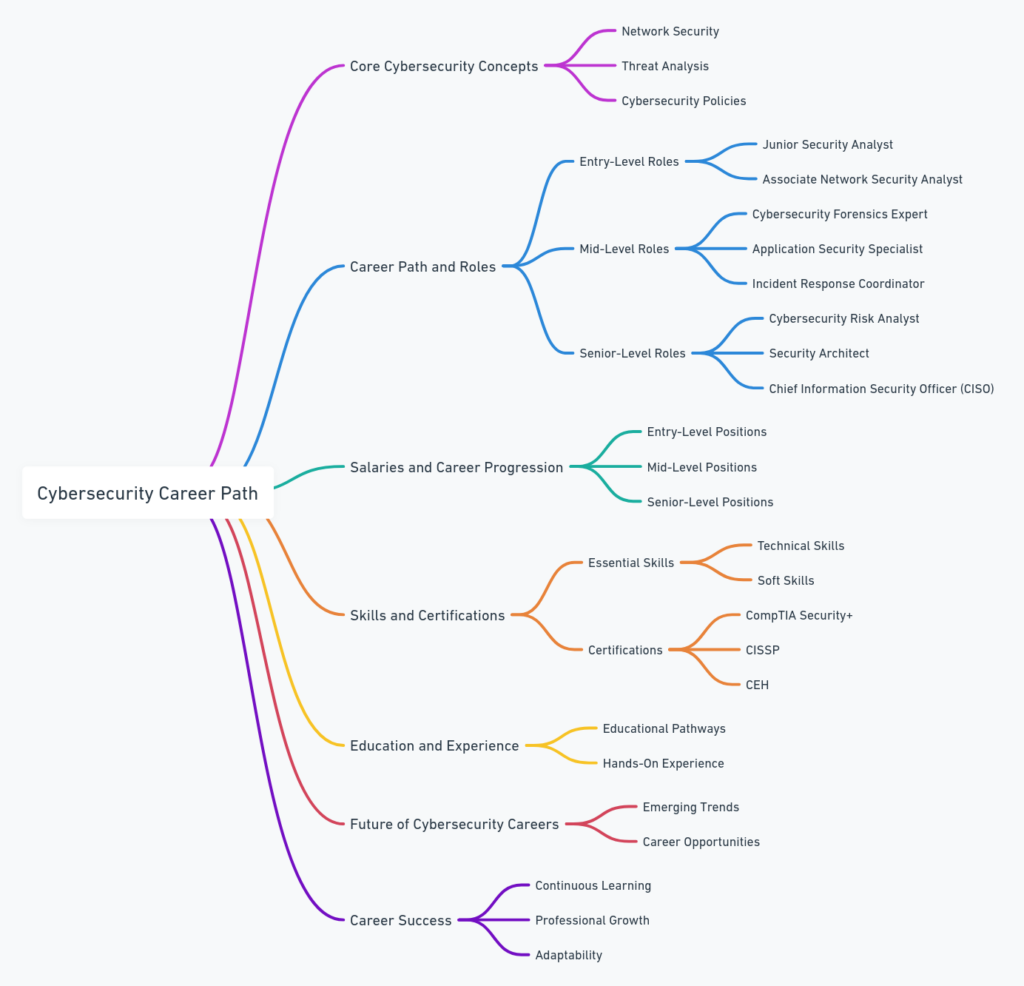
A career in cybersecurity is marked by diversity and the opportunity for continuous growth. Starting roles like Junior Security Analysts or Associate Network Security Analysts offer an entrance into the job in cybersecurity. As security leaders gain experience, they often hone their expertise in specific areas like cybersecurity forensics, application security, or incident response. This path isn’t linear; it offers multiple trajectories depending on one’s interests and skills. With the growing demand for cybersecurity professionals, the career path also includes strategic roles such as Cybersecurity Risk Analyst or Security Architect, where professionals oversee and guide an organization’s cybersecurity strategies.
Roles and Job Titles in Cybersecurity
The cybersecurity field offers a heaps of roles, each essential to the overall security posture of an organization. A Security Analyst, for example, plays a critical role in monitoring and defending against security breaches. On the other hand, a Cybersecurity Engineer focuses on creating robust security systems to prevent attacks. Strategic roles such as a Chief Information Security Officer (CISO) involve overseeing the entire security landscape of an organization, making critical decisions on security policies and strategies.
Salaries and Career Progression
Cybersecurity professionals relish competitive salary range measures that mirror the crucial nature of their roles. Entry-level positions offer a solid foundation, both financially and in terms of career development. As professionals ascend the cyber security career path, transitioning into positions like Cybersecurity Specialist or Information Security Manager, the salary range notably elevates. Senior positions like Security Architect or CISO command high salaries, commensurate with their experience and the critical nature of their roles in safeguarding an organization’s digital assets.
Skills and Certifications: The Building Blocks of a Cybersecurity Career
Essential Cybersecurity Skills
The cybersecurity industry requires a unique blend of technical and soft skills. Technical skills such as comprehending security breaches, handling security incidents, and proficiency in cloud security are indispensable in any job in cybersecurity. However, soft skills like communication, leadership, and problem-solving are equally pivotal, especially for security leaders who need to liaise with various organizational departments or external stakeholders.
Certifications: Your Passport to Career Advancement
In the world of cybersecurity, certifications are more than just award; they are a necessity for career advancement. Foundational certifications like CompTIA Security+ are ideal for beginners, while advanced certifications like CISSP and CEH are suited for those looking to specialize further. These certifications not only enhance a professional’s credibility but also keep them updated with the evolving cybersecurity landscape. Additionally, there are certifications that are vendor-specific – like certifications around Azure Security or AWS Security.
Cybersecurity Education and Hands-On Experience
Educational Pathways
Education in cybersecurity goes beyond traditional degrees. While a bachelor’s degree in computer science or a related field provides a strong foundation, the field requires continuous learning to stay abreast of the rapidly evolving cyber threats. This includes specialized training, workshops, and online courses in areas like cyber threat intelligence, network defense, security information, and event management.
Gaining Hands-On Experience
Hands-on experience is paramount in cybersecurity. This can be acquired through internships in security operations centers, entry-level jobs in network security, or through participation in cybersecurity competitions and hackathons. Such experiences are invaluable, providing real-world exposure to security threats and the practical application of theoretical knowledge.
There are also some online institutes and sites that offer a wide range of scenario-based labs where you can gain experience in real-world challenges.
The Future of Cybersecurity Careers
Emerging Trends and Opportunities
The future of cybersecurity is shaped by emerging trends like artificial intelligence in security, the increasing importance of cloud security, and the need for advanced threat intelligence. Professionals must stay informed and adaptable to these trends. New roles are emerging, such as Cybersecurity AI Specialist or Cloud Security Compliance Officer, offering new avenues for career growth.
Cybersecurity Career Success
Success in a cybersecurity career hinges on a proactive approach to learning and skill development. This includes staying current with the latest cybersecurity developments, continuously seeking opportunities for professional growth, and being open to evolving roles within the cybersecurity spectrum. Whether as a hands-on analyst or a strategic leader, a successful cybersecurity professional is always learning and evolving.
Overall this can be represented as:
FAQ:
Q: What are some important factors for success in a cybersecurity career?
A: Success in cybersecurity requires a deep understanding of cybersecurity principles, gaining relevant certifications like Certified Ethical Hacker or Certified Information Systems Security Professional, and acquiring hands-on experience via internships or entry-level roles. A successful career in this field often involves continuously updating one’s knowledge to stay ahead of evolving security risks.
Q: How does one get started in a career in cybersecurity?
A: Getting started in cybersecurity typically involves studying the science of cybersecurity or related fields, understanding different aspects of cybersecurity, and obtaining foundational certifications like CompTIA Security. Entry-level roles, such as an information security analyst, provide practical experience in the cybersecurity space.
Q: What are the various job roles available in cybersecurity?
A: There are numerous roles in cybersecurity, catering to different areas of expertise. These include positions like cybersecurity specialist, security analyst, network security engineer, cybersecurity auditor, and application security engineer. Each role focuses on specific security measures within an organization’s cybersecurity infrastructure.
Q: What are the career prospects and salary expectations in the field of cybersecurity?
A: A career in cyber offers a wide range of paths one can take, from entry-level cybersecurity positions to roles such as security engineers and seasoned cybersecurity leaders. Salaries in cybersecurity vary depending on the job role and experience, but generally, cybersecurity salaries are competitive, reflecting the importance of these roles in maintaining an organization’s security.
Q: What qualifications or certifications are beneficial for a cybersecurity role?
A: For a cybersecurity role, having relevant certifications is crucial. These include Certified Ethical Hacker, Certified Information Security Manager, and CompTIA Advanced Security Practitioner. These certifications demonstrate a professional’s competence in various cybersecurity tasks and are often sought after by employers.
Q: Can you describe the different cybersecurity career paths available?
A: There are 5 cybersecurity career paths outlined in the NICE Cybersecurity Workforce Framework. These paths include becoming a security analyst, cybersecurity expert, cloud security engineer, or focusing on more specialized areas of cybersecurity. Each path offers unique opportunities to protect against different security threats and challenges.
Q: What does a career path in cybersecurity typically look like?
A: A career path in cybersecurity often starts with an entry-level position, where individuals learn the fundamentals of cyber security. As they gain experience, they may progress to more advanced roles, such as a security engineer or cybersecurity team leader. A successful cybersecurity career involves continuous learning and adaptation to new security challenges.
Q: What is the role of a Certified Information Security Manager in cybersecurity?
A: A Certified Information Security Manager plays a critical role in managing an organization’s cyber security. Their job involves overseeing and coordinating security measures to protect the organization’s information systems against cyber threats.
Q: How important is a cybersecurity specialist in an organization’s security team?
A: A cybersecurity specialist is vital in an organization’s security team. They are responsible for implementing and maintaining security protocols, identifying vulnerabilities, and responding to security breaches. Their expertise is essential in safeguarding the organization’s cyber infrastructure.
Q: What are the challenges of starting a career in cybersecurity?
A: Starting a career in cybersecurity can be challenging due to the need for a strong foundation in various aspects of cybersecurity, understanding complex security systems, and keeping up with rapidly evolving cyber threats. However, with dedication and the right approach to cybersecurity, these challenges can be effectively managed.
Q: What is the significance of the CompTIA Security+ certification in a cybersecurity career?
A: The CompTIA Security+ certification is significant in a cybersecurity career as it provides a solid foundation in core security functions. It is widely recognized and helps professionals demonstrate their cybersecurity knowledge, making it an excellent starting point for those new to the field.
Q: What does an entry-level cybersecurity job entail?
A: An entry-level cybersecurity job entails tasks like monitoring security systems, assisting in the investigation of security breaches, and learning about various cybersecurity tools and techniques. It’s a critical step for gaining experience and understanding the practical aspects of cybersecurity.
Q: How does one become a successful cybersecurity expert?
A: To become a successful cybersecurity expert, one must have a thorough understanding of cybersecurity concepts, practical experience, and the ability to adapt to new technologies and threats. Ongoing education and staying abreast of the latest trends in the cybersecurity field are essential.