
Last Updated on May 27, 2024 by Arnav Sharma
What is DevOps?
Generally, in an IT company, we have two teams – one that creates stuffs (apps, code etc.) and the second one that operates the things created by the first team. The first team is usually known as the Development team, and the second one is Operations.
Development Team: Responsible for delivering the final product or software that works and performs some action. This can be an app that is installed on a server – the final product would be a working app and a server.
Operations Team: Responsible for running the app and managing the server (patch updates, rebooting etc.) and managing the underlying services (heating, cooling etc.). These are usually System Admins and Infra admins.
In case the operation team sees a bug in the app, then ops team needs to go back to Dev team to fix it. Dev team would then create a patch and share it with Ops team. And finally, Ops team would fix the app. So, there is an overlap between the two teams and dependency on the work both perform. Lastly, the time taken to communicate, fix, test etc. was a lot.
So “DevOps” refers to the practice of mixing these two teams to get benefits like lesser turnover time, better efficiency, agility, and less workload. Here, developers understand operations and the operations team understands development. They might work in the same room or may even be the same people managing everything.
How does Azure DevOps help here?
Azure DevOps help to:
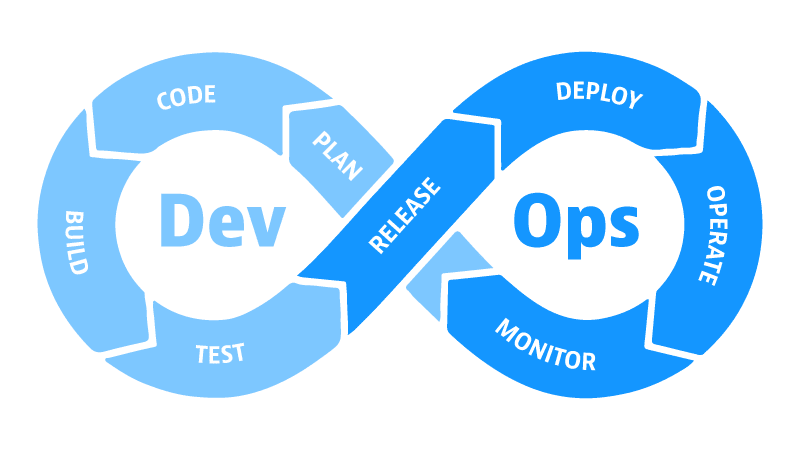
Plan: Track progress at low and high levels of granularity. Creating backlogs, tracking bugs, managing agile software development with Scrum, using Kanban boards, and visualizing progress with dashboards are some of the ways DevOps teams plan with agility and visibility.
Develop: The development phase includes all aspects of coding—writing, testing, reviewing, and the integration of code by team members—as well as building that code into build artifacts that can be deployed into various environments.
Deliver: In the deliver phase, teams define a release management process with clear manual approval stages. They also set automated gates that move applications between stages until they are made available to customers. Automating these processes makes them scalable, repeatable, controlled. This way, teams who practice DevOps can deliver frequently with ease, confidence, and peace of mind.
Operate: Teams work to ensure system reliability, high availability, and aim for zero downtime while reinforcing security and governance. DevOps teams seek to identify issues before they affect the customer experience and mitigate issues quickly when they do occur.

What is Infrastructure as Code?
Infrastructure as Code (IaC) is the management of infrastructure (networks, virtual machines, load balancers, and connection topology) in a descriptive model, using the same versioning as DevOps team uses for source code. Like the principle that the same source code generates the same binary, an IaC model generates the same environment every time it is applied.
Infrastructure as Code enables DevOps teams to test applications in production-like environments early in the development cycle. These teams expect to provision multiple test environments reliably and on demand. Infrastructure represented as code can also be validated and tested to prevent common deployment issues. At the same time, the cloud dynamically provisions and tears down environments based on IaC definitions.
Not familiar with Code – DevOps may hurt at first!! ?
If it hurts, do it more often. Just like going to the gym, adopting new practices is likely to hurt at first. The more often you exercise the new techniques, the easier they will become.
Like training at the gym, where you first exercise large muscles before small muscles, adopt practices that have the most significant impact. Cross-train to develop synergy.
Certification for Azure DevOps?
Microsoft Certified: DevOps Engineer Expert – Learn | Microsoft Docs
FAQ – DevOps Matters
Q: Why is DevOps important?
A: DevOps is important because it allows for better communication and collaboration between development and operations teams. It helps to streamline the development process and enables continuous integration and continuous delivery. By adopting DevOps principles, organizations can improve software quality, speed up software delivery, and enhance overall efficiency.
Q: What are the benefits of DevOps?
A: DevOps brings numerous benefits to organizations. It enables faster and more frequent software releases, reduces development cycle time, improves software delivery process, and enhances software product quality. It also promotes better collaboration and communication between teams, reduces operational costs, and increases overall productivity.
Q: What are some key DevOps practices?
A: Some key DevOps practices include continuous integration, continuous delivery, automation, and collaboration. Continuous integration involves merging code changes frequently to detect and resolve issues early. Continuous delivery ensures that software can be released quickly and reliably. Automation automates repetitive tasks, reducing manual effort. Collaboration involves effective communication and cooperation between different teams.
Q: What is the DevOps lifecycle?
A: The DevOps lifecycle refers to the combination of development and operations processes to achieve continuous integration, continuous delivery, and the ability to quickly respond to changing business needs. It includes planning, coding, building, testing, release, deployment, operation, monitoring, and feedback. The goal of the DevOps lifecycle is to ensure efficient and high-quality software delivery.
Q: What are some popular DevOps tools?
A: There are various DevOps tools available to support different stages of the software development process. Some popular DevOps tools include Jenkins, Git, Docker, Kubernetes, Ansible, Puppet, Chef, and Nagios. These tools enable automation, version control, containerization, deployment management, and monitoring, among other functionalities.
Q: What is the importance of DevOps culture?
A: DevOps culture is important because it emphasizes collaboration, communication, and shared responsibility between development and operations teams. It promotes a mindset of continuous improvement, agility, and innovation. A strong DevOps culture fosters better teamwork, faster problem-solving, and increased efficiency in software development and delivery.
Q: How does DevOps really matter in the world of software development?
A: DevOps really matters in the world of software development because it enables faster time-to-market, higher software quality, and improved customer satisfaction. By adopting DevOps practices, organizations can achieve better coordination between teams, faster delivery of features and bug fixes, and the ability to respond quickly to customer feedback and changing market demands.
Q: What is the role of automation in DevOps?
A: Automation plays a crucial role in DevOps. It helps to streamline repetitive and manual tasks, enabling teams to focus on more critical and creative activities. Automation reduces human errors, speeds up software delivery, ensures consistency, and improves overall efficiency. Continuous integration, continuous delivery, and infrastructure provisioning are some areas that benefit from automation in DevOps.
Q: How can organizations adopt DevOps?
A: Organizations can adopt DevOps by fostering a culture of collaboration and communication, implementing DevOps practices, and leveraging appropriate DevOps tools. It is important to prioritize automation, establish cross-functional teams, break down silos, and encourage a mindset of continuous improvement. Organizations should also provide training and support for teams to acquire the necessary skills and knowledge for successful DevOps implementation.
Q: What are the core principles of DevOps?
A: The core principles of DevOps include automating the software delivery process, employing continuous feedback loops, emphasizing close collaboration and communication between teams, promoting a culture of shared responsibility and accountability, and continuously improving systems and processes. These principles help organizations achieve faster, more reliable, and higher-quality software development and delivery.
Q: How does DevOps differ from traditional software development methods?
A: DevOps is a set of practices and processes that bring development and operations teams together to complete software development and infrastructure management processes more efficiently. Unlike organizations using traditional software development methods, where operations and development are often siloed, DevOps promotes a collaborative culture and approach to software development. This integration makes the process increasingly seamless and efficient, especially important in the current fast-paced development environment.
Q: Why is it important for development teams to adopt the DevOps methodology?
A: DevOps is crucial to modern software development as it enables faster development of new products and applications. By adopting the DevOps methodology, development and operations teams work together, using agile practices and the right tools, to deliver software products at a faster pace. This synergy is essential for meeting the demands of end users and maintaining a competitive edge in the market. The DevOps culture not only speeds up development cycles but also reduces risks associated with software defects.
Q: What are the key benefits of using DevOps for software engineers and organizations?
A: The key benefits of using DevOps for software engineers and organizations include shorter development cycles, improved collaboration between developers and operations teams, and the ability to deploy applications and services with greater speed and efficiency. DevOps combines the strengths of development and operations, making it easier to address issues and implement changes, leading to higher quality software. Additionally, the DevOps methodology enables organizations to respond more rapidly to market changes and deliver business value more effectively.
Q: How does the adoption of DevOps impact the quality of software development?
A: Adopting DevOps methodology greatly enhances the quality of software development. It encourages a continuous integration and deployment environment, which means new software features and fixes can be released more frequently and with fewer errors. The DevOps practice of combining software development with operations ensures a more holistic view of software production, leading to fewer issues due to programming defects. Overall, the transition to DevOps ensures that the software development process becomes more efficient and reliable.
Q: In what ways do agile methodologies complement DevOps?
A: Agile methodologies complement DevOps by providing a framework that supports the collaborative and iterative nature of DevOps. Agile focuses on adaptive planning, early delivery, and continuous improvement, all of which are essential to the DevOps culture. By using agile practices, DevOps teams can deliver new software features and updates in shorter cycles, ensuring quicker feedback and adaptation to user needs. Together, Agile and DevOps create a more dynamic and responsive software development environment